


Early Explorations
This approach is something I developed several years ago.
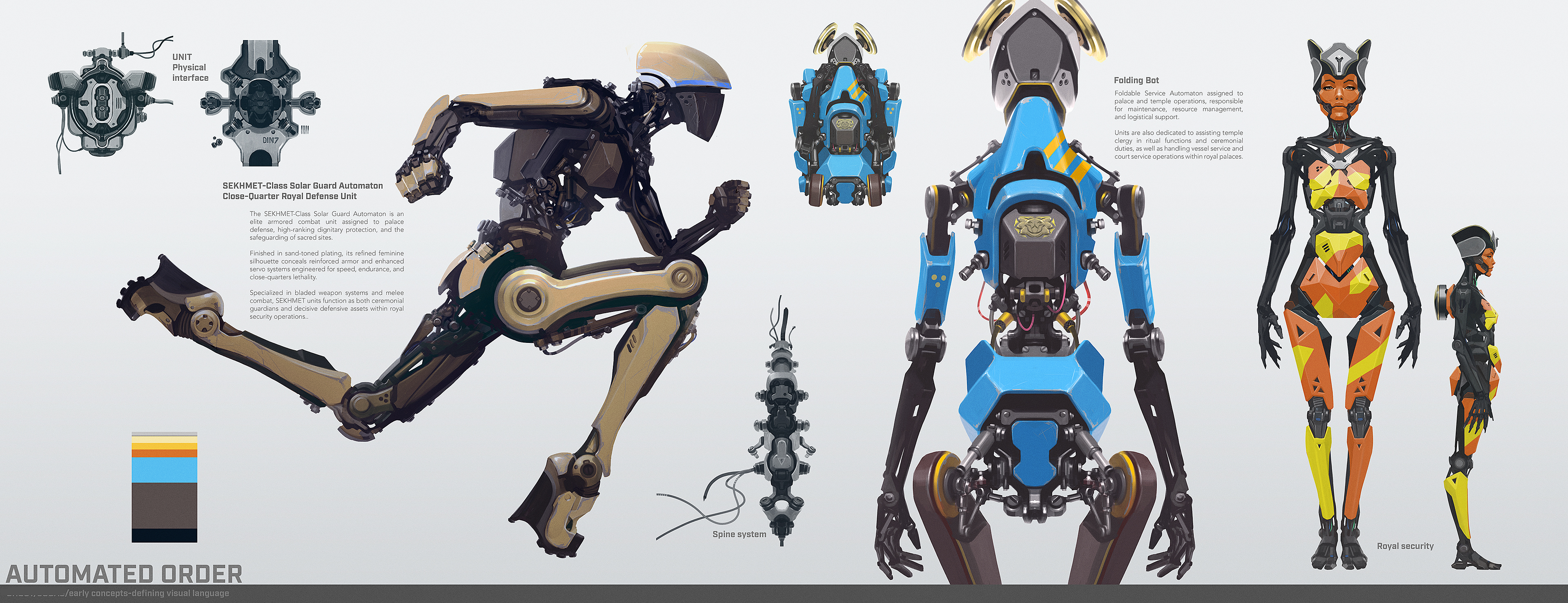
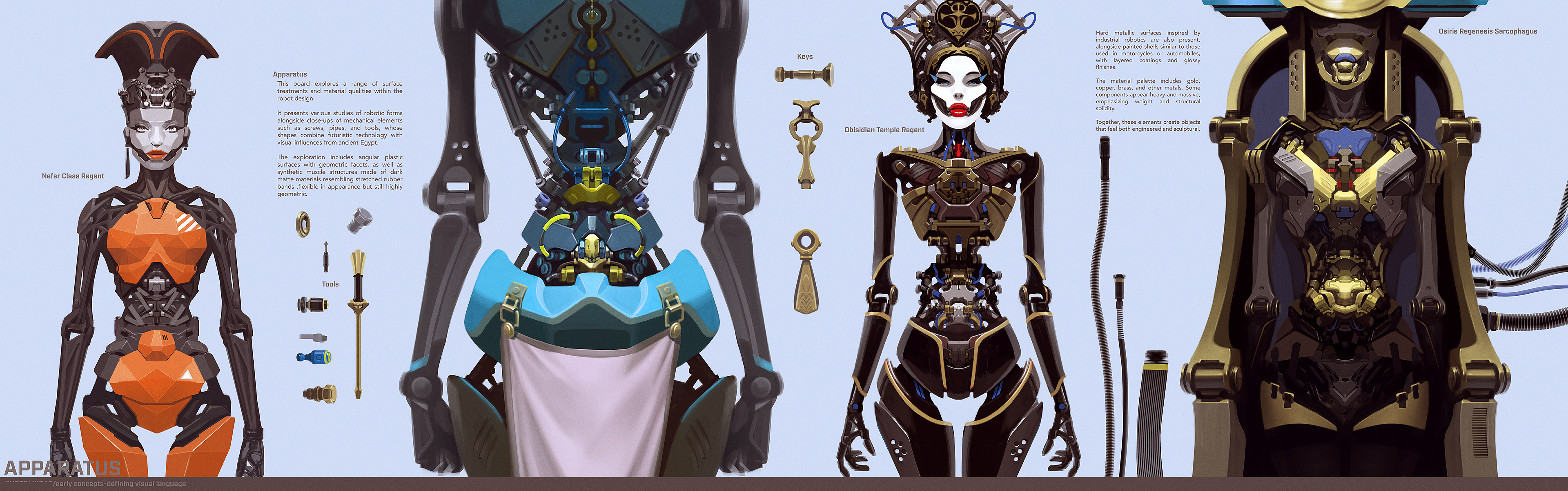
Whenever time allows it at the beginning of a project, I create a series of exploratory boards before the actual production work begins. These explorations are intentionally unconstrained. I approach the universe as if I were responsible for inventing it entirely on my own.
The purpose of this process is simple. Once a project enters production, creative work inevitably follows the direction, rules, and constraints defined by the client. While this structure is necessary, it can sometimes narrow the field of possibilities too early.
By temporarily stepping outside those constraints, I allow myself to explore the world more freely and to build a complete creative vision of what it could be.
This phase is also a way of expressing ideas without hesitation. Instead of carrying them mentally throughout the project, they are placed on the page. In that sense, it acts as a constructive release, a way to clear the mind while giving form to instincts that might otherwise remain unexplored.
Another important aspect of this process is that it creates a personal visual library for the project. These early explorations often capture the visual language of a world in its most direct and uncompromised form. Later in development, when the project evolves and new constraints appear, it can be valuable to return to these boards as a reference point, a reminder of the original creative impulses.
I often encourage other creatives to experiment with this kind of approach. It is not about imposing a vision or claiming ownership of a project. Rather, it is a personal creative manifesto, a constructive way to explore ideas, establish a visual foundation, and keep a sense of creative freedom at the very beginning of a project.

Environment Relationship
Although these boards primarily focus on characters and robotic protagonists, the work is always conceived in relation to an environment.
Whenever possible, I include at least one environmental image, not as a finished key art, but as a simple, almost iconic view of the world. A place that captures the atmosphere of the universe at a glance.
This allows the visual language to expand from micro to macro scale. Materials, colors and forms explored in the characters naturally extend into architecture and landscape.
Even a single environment is enough to anchor the world. It provides a spatial context for the designs and helps establish the relationship between figures, scale and atmosphere.
At this stage the goal is not production accuracy, but coherence, a first glimpse of how the visual language inhabits space.


Human-Machine Abstraction Study
This series explores the gradual transition between human anatomy and industrial robotic abstraction. The first design retains a strong human structure, while subsequent iterations introduce increasingly geometric and angular surfaces. By the third stage, only minimal human cues remain, the lips, neck, and overall silhouette, as the design shifts toward a more abstract mechanical language. In the final portrait, traces of femininity and a torso remain perceptible, but facial features disappear entirely, giving way to a purely industrial form.
This type of exploration helps define where to position the balance between humanity and mechanical abstraction, providing a visual range that allows clients and teams to discuss and determine the final direction.

 FRANCK CHIPOUKA