

A world must function before it can exist visually.
Every structure, district, and pathway is defined by narrative intent and systemic logic.
Context
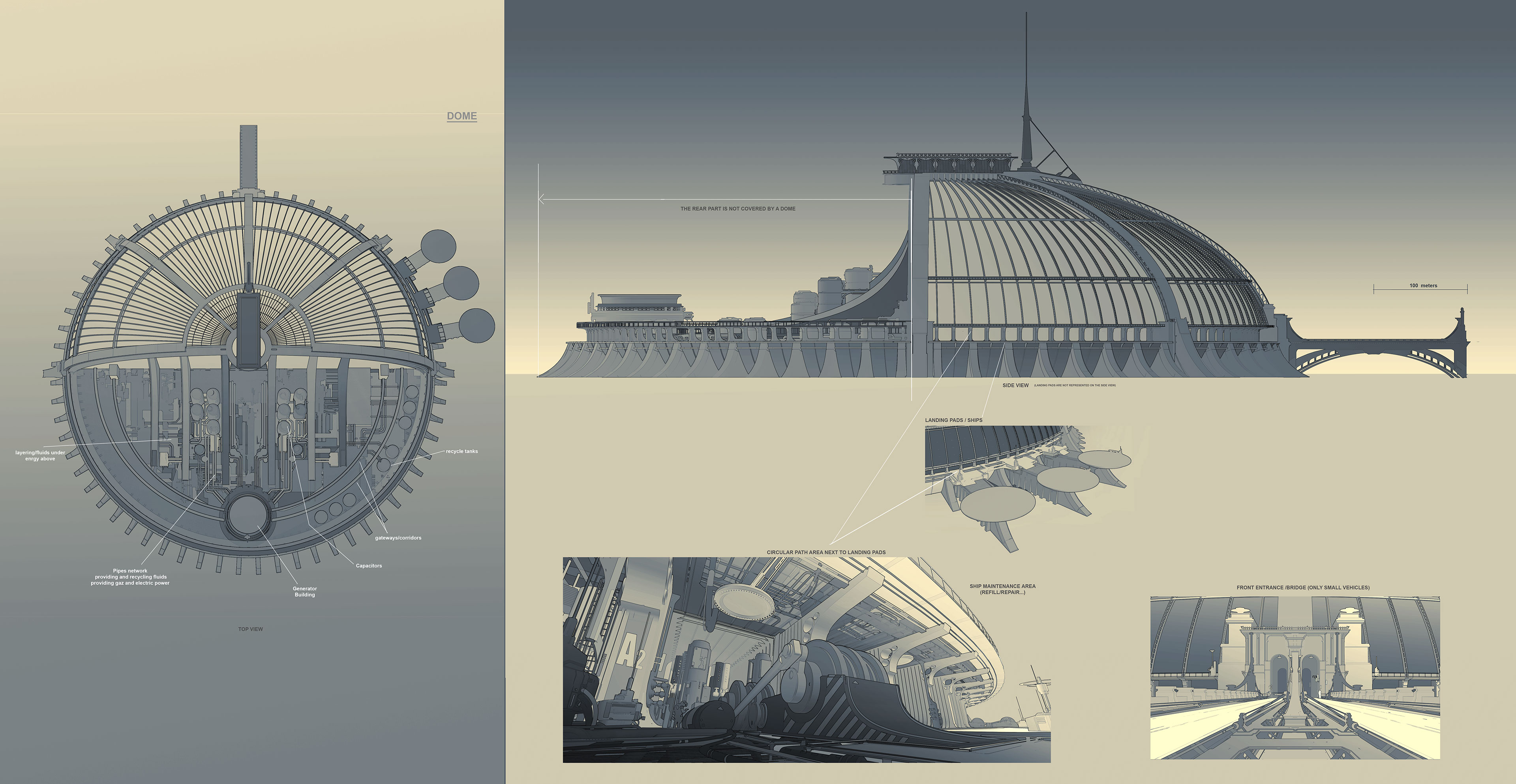
The setting is a distant planetary colony where humanity has reconstructed part of its industrial ecosystem within vast protective domes.
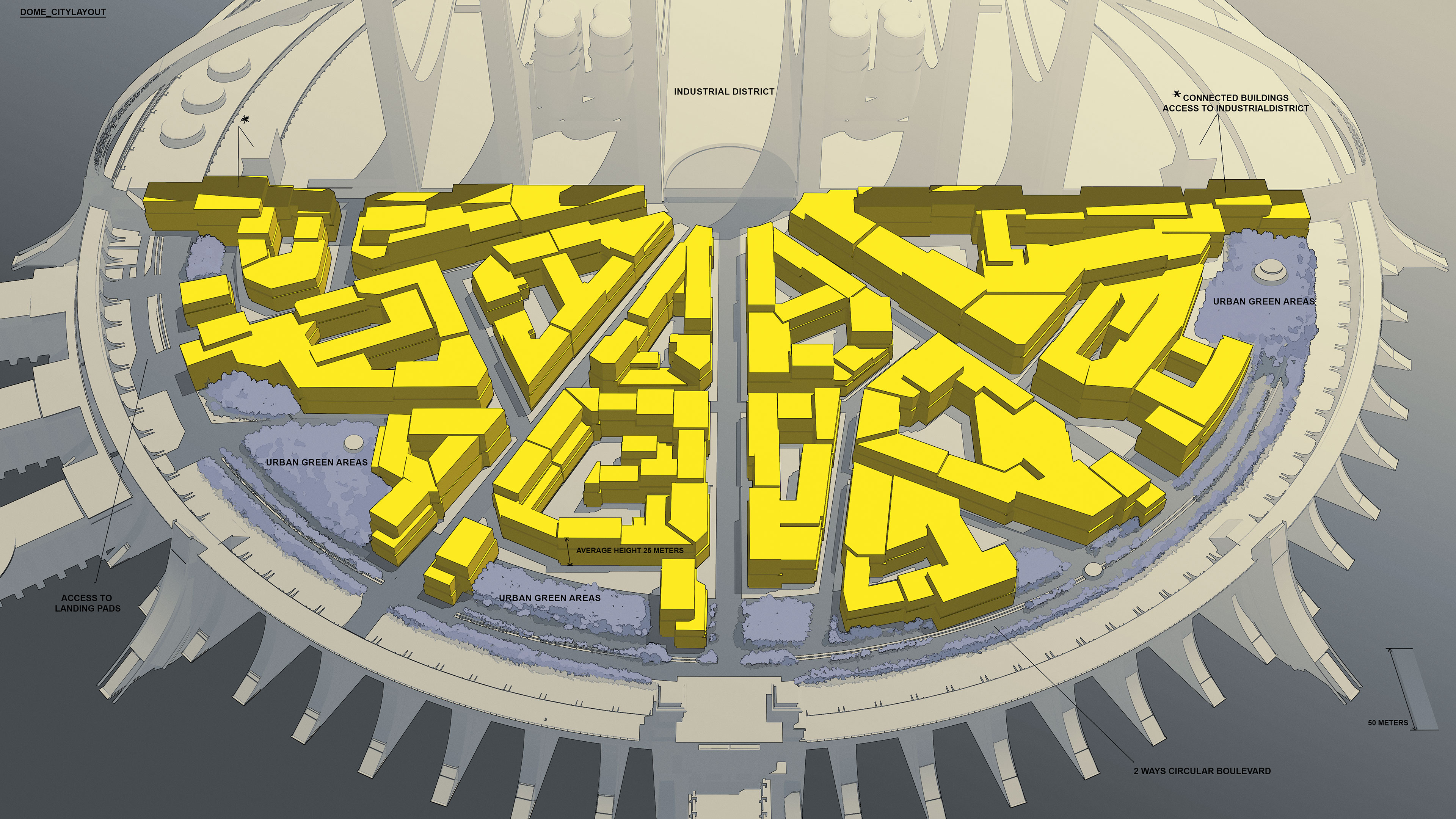
Each dome operates as a contained city, divided into industrial, residential, and astroport districts, connected by interplanetary transport networks.
Streets, green areas, and civic zones establish scale, hierarchy, and lived-in credibility.
Structural Logic
The layout defines the world’s coherence. Movement, access, density, and spatial relationships are organized to allow believable interaction between characters and environment.
The city is designed as a functional system before becoming a visual statement.
Architectural Language
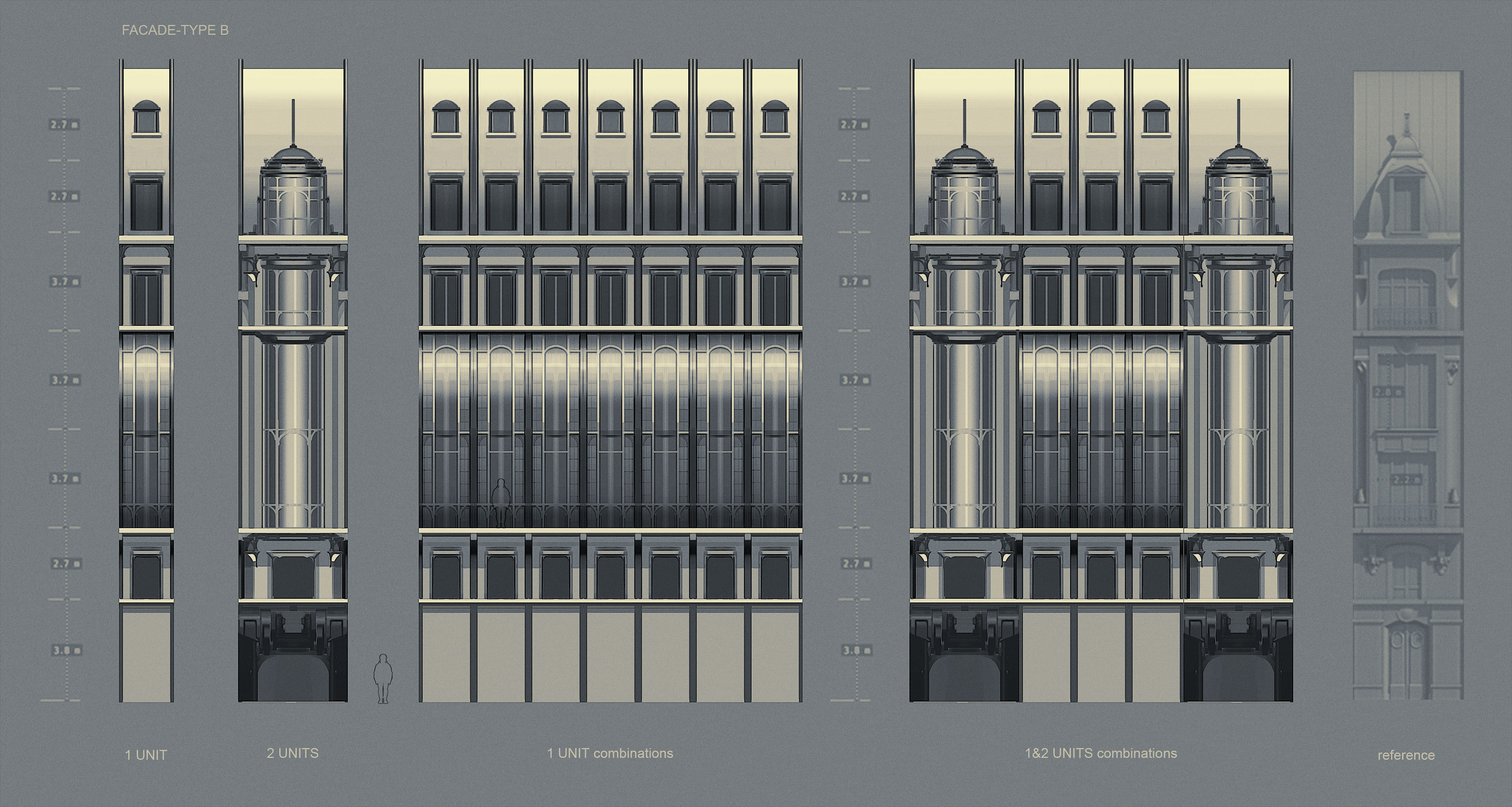
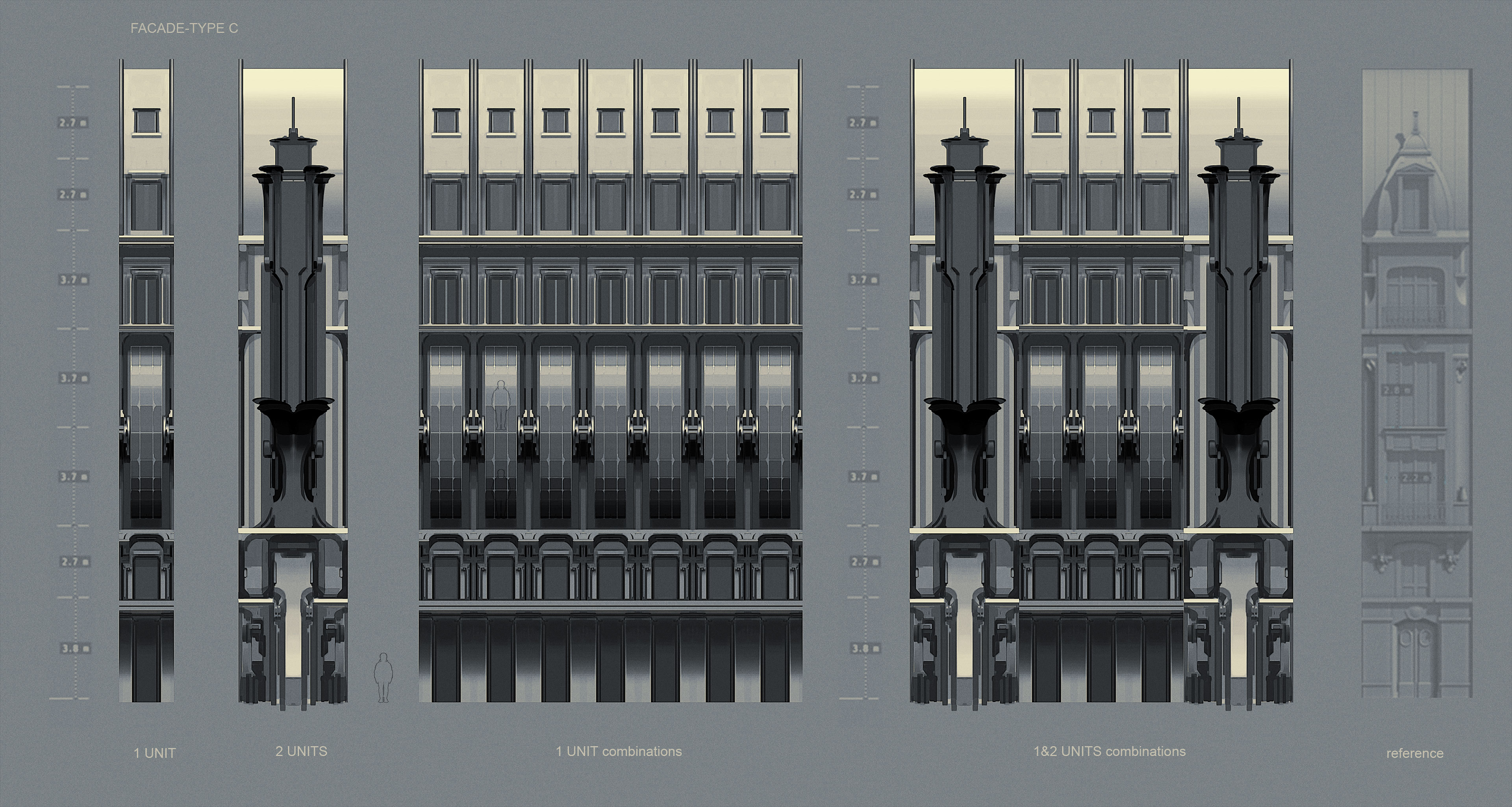
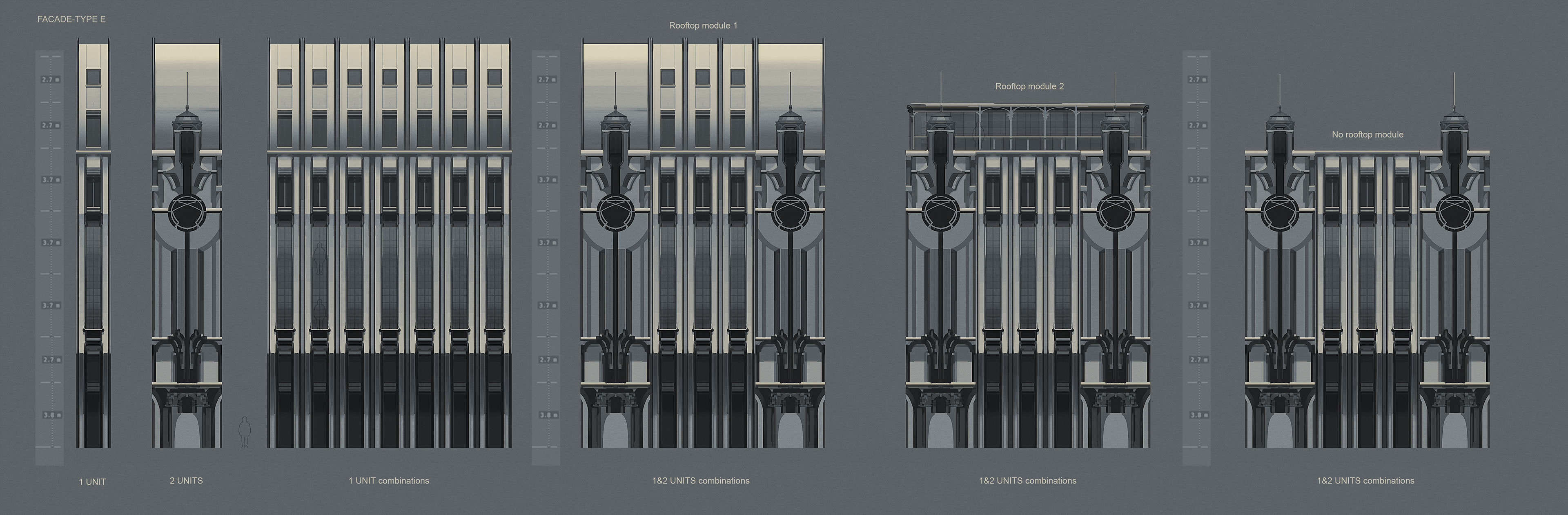
Each structure is developed under predefined architectural rules.
Modular façades, scalable systems, and repeatable logic ensure consistency across the environment while maintaining visual identity.
Form follows function, and variation emerges from structured constraints.
Spatial Vision
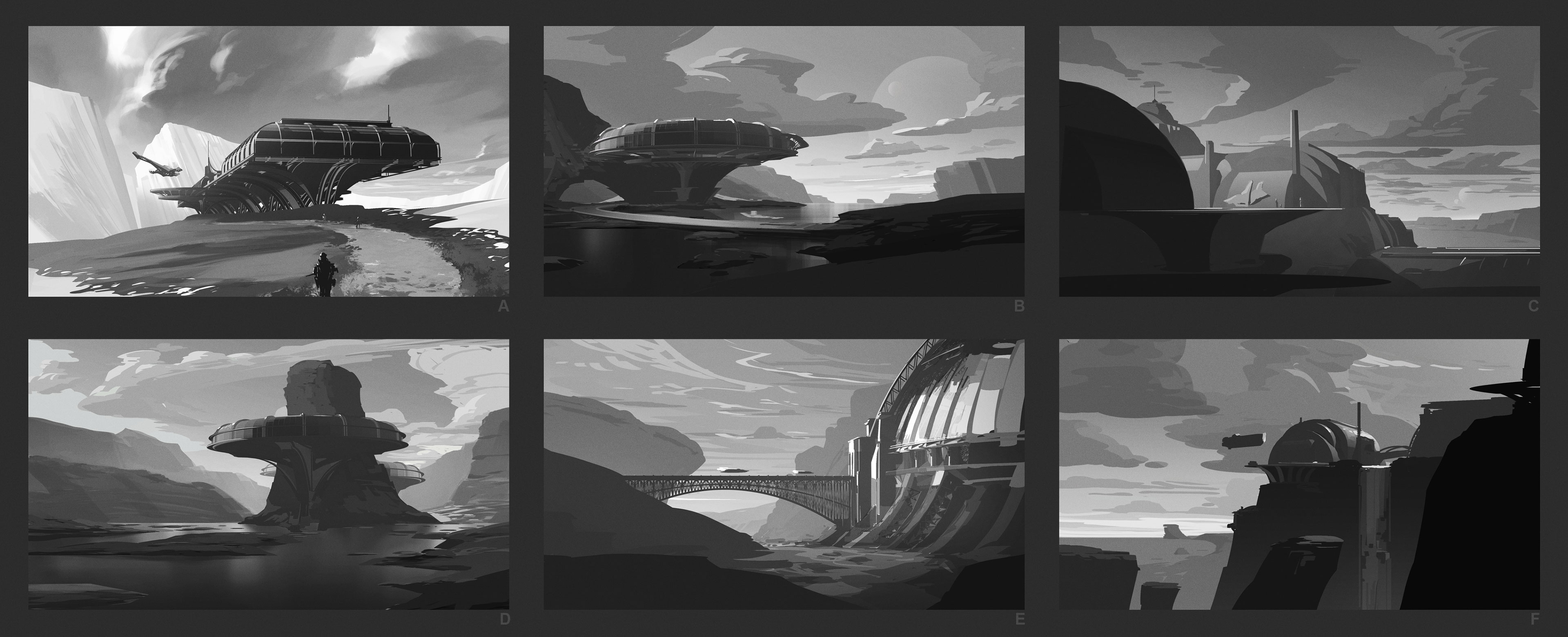
Three-dimensional perception is explored early to validate atmosphere, scale, and visual hierarchy.
A rough concept establishes the spatial tension of the world and sets the framework for a defining key image.
Calibration
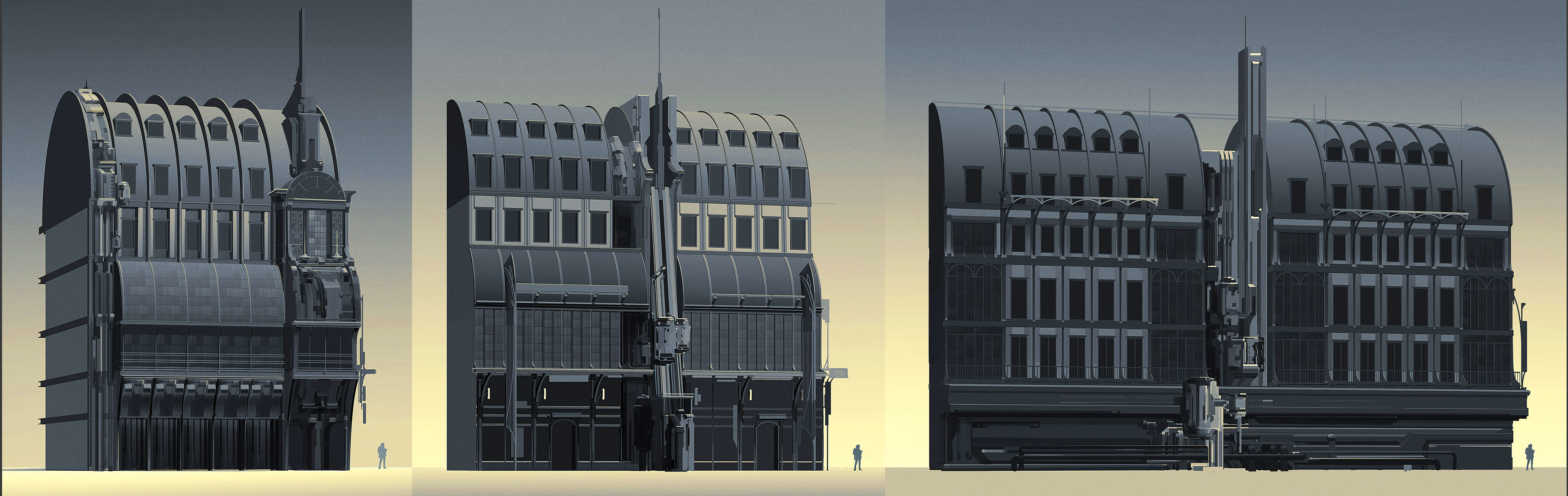
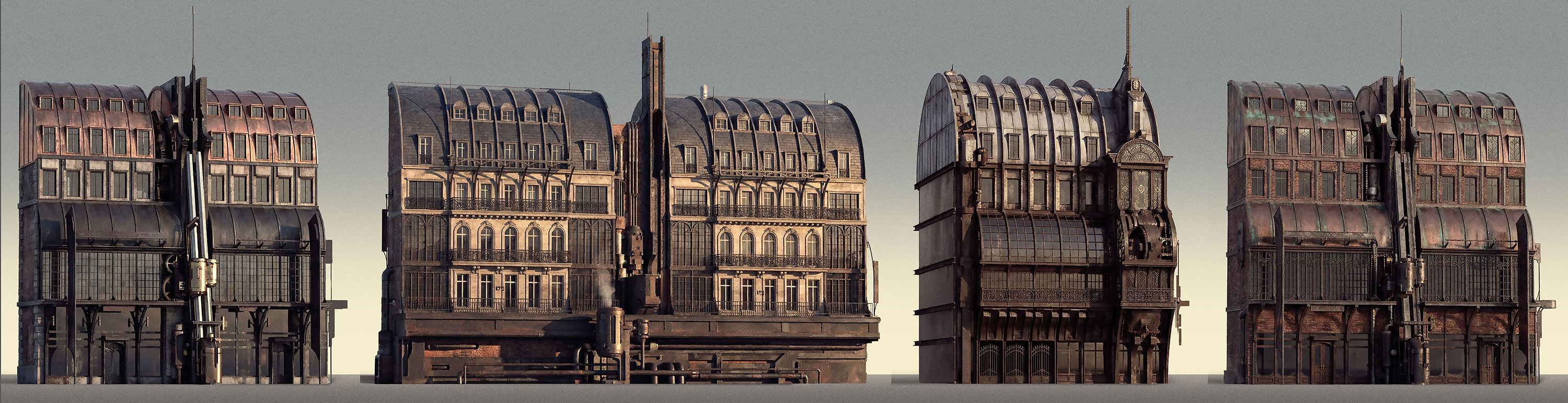
Test assets are produced to align level of detail, material treatment, and stylistic density.
This step ensures that the world remains unified when scaled.
Consolidation
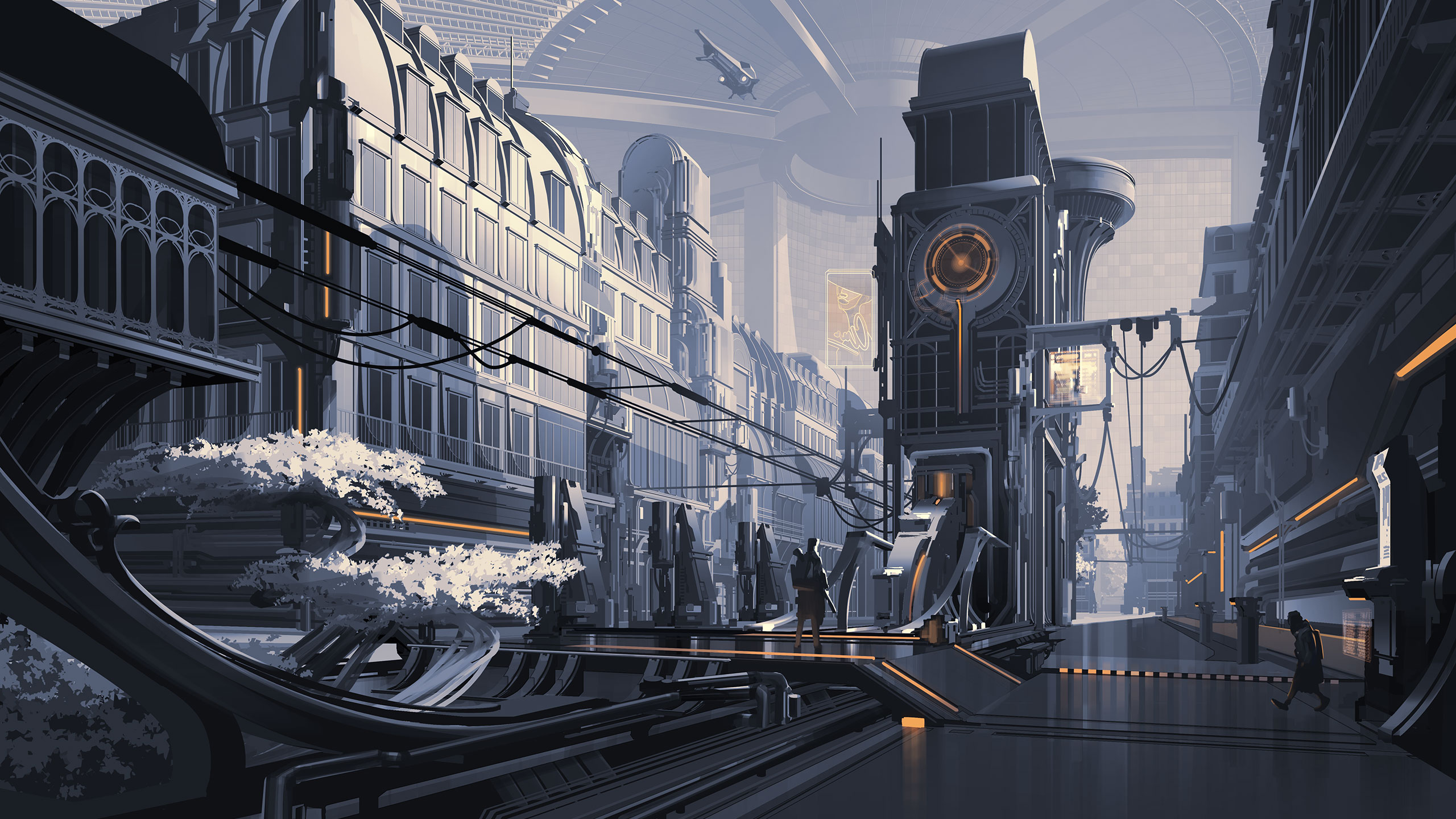
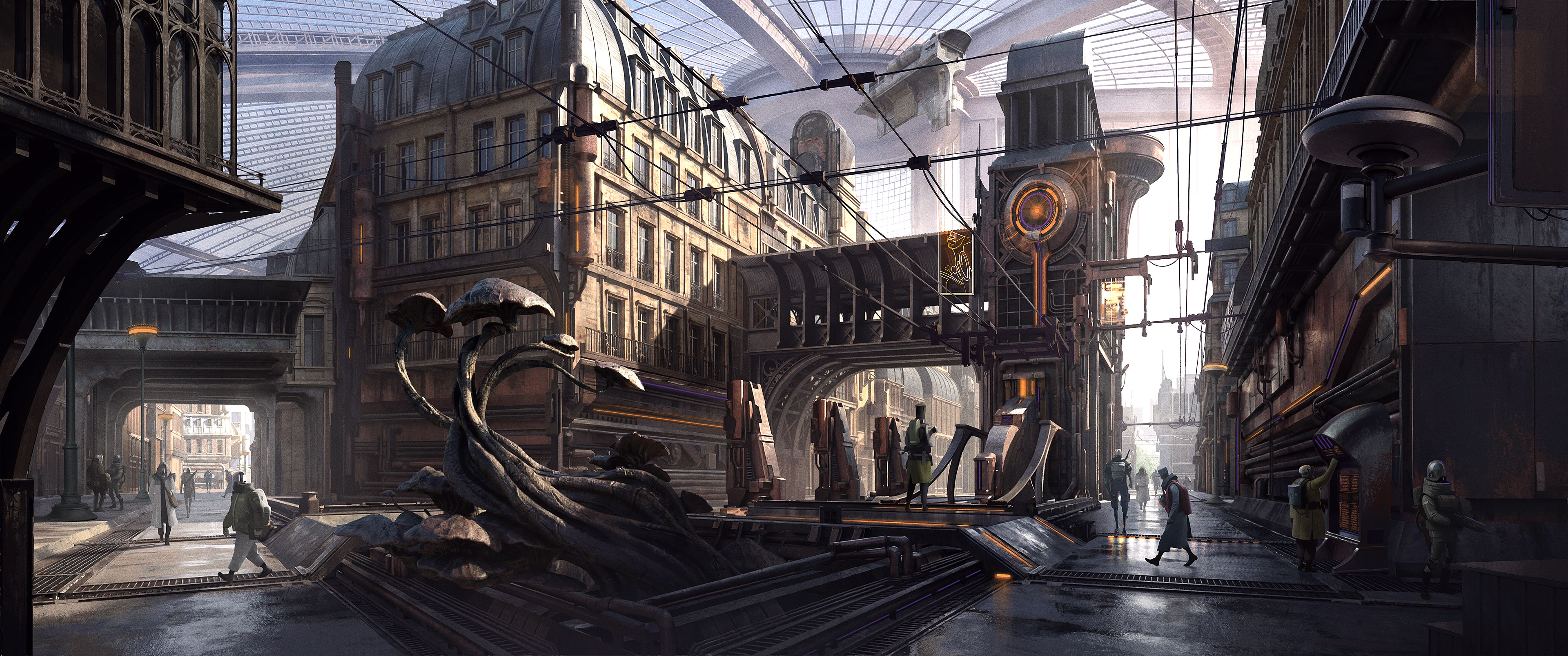
The final key art synthesizes the system.
It anchors the universe in a single, readable composition, presenting a coherent world ready to support narrative, gameplay, and production.

 FRANCK CHIPOUKA